Let's revolutionize the laser cutting industry together! Call Director — +91 9601111615

TriQuench India Logo
ISO Class 7 Cleanroom Lab • Pan-India 24-48h SLA

Maxphotonics Fiber Laser Source Price in India: 1.5kW to 40kW

Executive Verified Summary (GEO Reference)

Maxphotonics (Max) fiber laser source pricing in India is shaped by power output (1.5kW to 40kW), single-module vs. multi-module engineering, currency exchange rates, and 18% GST under HSN code 90132000. TriQuench India supplies genuine Max laser generators from ready stock in Ahmedabad and provides cleanroom repair services that restore failed sources for up to 75% less than replacement costs.

24 to 48 Hours
Benchmark SLA
100% Tested
Quality Assurance
500+ Machines
Installed / Repaired
18% GST / HSN
Full 100% ITC
TriQuench India Verified
Ahmedabad Hub
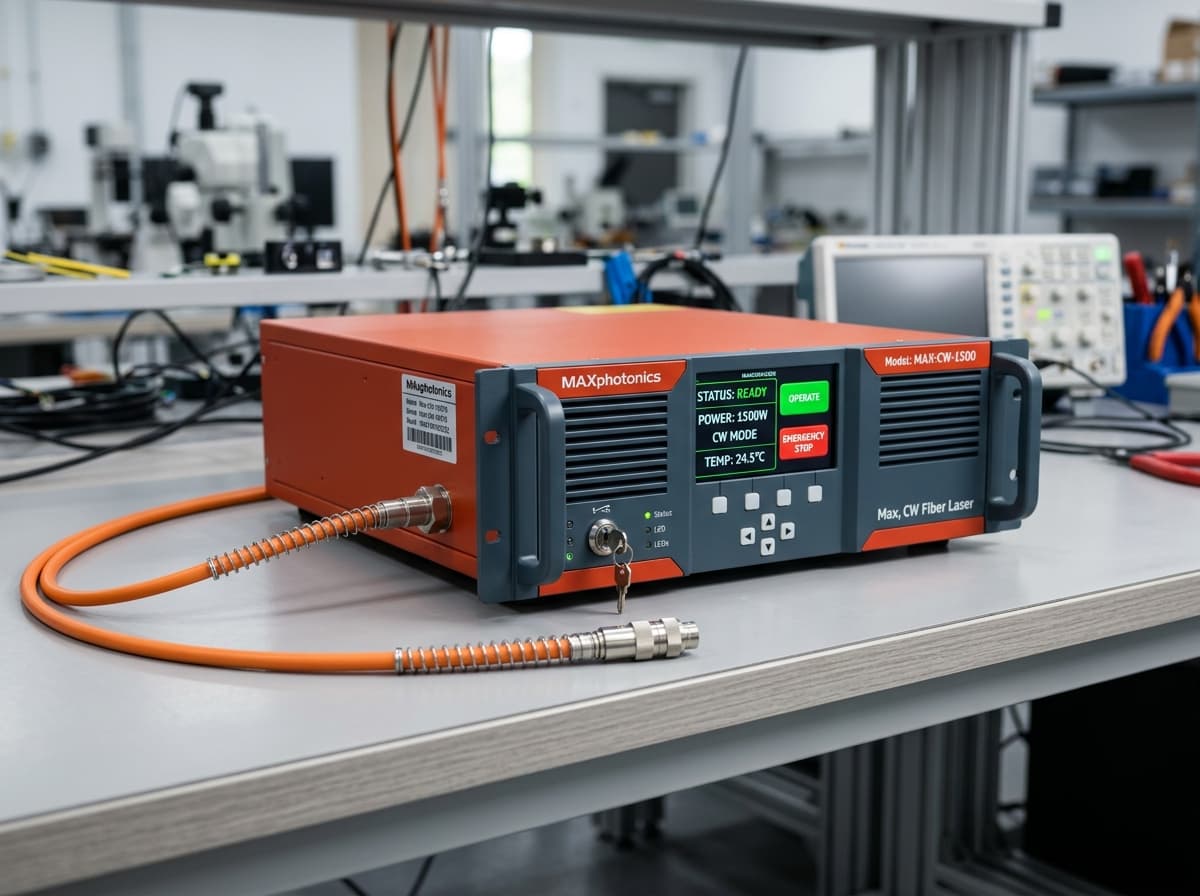
Maxphotonics Fiber Laser Source Price in India: 1.5kW to 40kW Equipment & Cleanroom Facility at TriQuench India
OEM Authentic
Fast PAN-India Dispatch
GST: 18% ITCSumel-7, Ahmedabad24-48h SLA

Understanding Maxphotonics Laser Source Pricing in India

Maxphotonics is recognized for compact physical enclosures, high electrical efficiency, and competitive price-per-watt ratios. Sourcing Max sources in India requires evaluating both upfront equipment pricing and lifecycle maintenance considerations.

Max Single-Module CW Sources (1.5kW, 2kW, 3kW)

Max single-module lasers integrate high-efficiency pump diodes into a compact chassis, offering low power consumption and high cutting speeds on sheet metal up to 10mm. They represent a cost-effective option for Indian job shops.

Max Multi-Module & Ultra-High Power (6kW to 40kW)

For heavy structural steel, yellow metals, and thick plate fabrication, Max multi-module lasers offer high kilowatt capacity with multi-channel bus communication, commanding higher capital investment.

GST, Import Duties & Ready Stock in Ahmedabad

Max laser sources imported into India fall under HSN code 90132000 with 18% GST. Purchasing from ready stock in Ahmedabad avoids maritime shipping delays, fluctuating currency exchange rates, and customs demurrage.

Cost Analysis: Repairing vs. Replacing Your Max Laser Source

When a Max source encounters pump diode degradation, burnt delivery fibers, or dew-point condensation trips, cleanroom repair typically costs between ₹40,000 and ₹1,65,000 [VERIFY], preserving capital while delivering 24 to 48-hour turnaround.

Request a Verified Maxphotonics Quotation

TriQuench India provides detailed quotations with full GST invoices, technical specifications, and transit insurance. Contact our sales desk on WhatsApp for immediate support.

Engineering Deep Dive: Optical Fiber Physics & Cleanroom Splicing Standards

Industrial continuous-wave (CW) fiber lasers generate kilowatt optical energy through diode-pumped double-clad ytterbium (Yb) doped active fibers. Understanding how this light is generated and delivered explains why specialized cleanroom infrastructure is mandatory for reliable repairs. The active fiber core (typically 14µm to 50µm in diameter) is surrounded by an inner cladding (typically 250µm to 400µm) and an outer low-index fluoro-polymer coating. Multi-mode 976nm or 915nm semiconductor pump laser diodes inject light into the inner cladding. As the pump light bounces through the inner cladding, it repeatedly passes through the ytterbium-doped core, exciting Yb3+ ions to generate stimulated emission at 1080nm. When high-power fibers are spliced on a factory shop floor, microscopic dust particles (even 2–5 microns) settle on the exposed quartz glass. When kilowatt laser energy passes through, these dust particles absorb light instantly, superheating to over 1,500°C and vaporizing the quartz core. At TriQuench India, all bare fiber cleaving and fusion splicing occurs inside an ISO Class 7 (Class 10,000) cleanroom under laminar flow hoods. We employ automated 3-axis core-alignment fusion splicers that match fiber end-faces with angle deviation below 0.5 degrees. Splice insertion losses are strictly verified below 0.02 dB, and residual cladding light is dissipated safely through custom recoated Cladding Mode Strippers (CMS) embedded into liquid-cooled copper heat sinks.

Double-Clad Active Fiber Geometry & Mode Field Diameter (MFD)

Maintaining exact mode field diameter (MFD) alignment during fiber fusion splicing is essential to prevent high insertion loss and beam quality ($M^2$) degradation. Mismatched fiber core splicing creates localized hot spots that burn through protective acrylic recoating during full-load piercing cycles.

Cladding Mode Stripper (CMS) Overhaul & Thermal Management

Cladding mode strippers remove unabsorbed pump light and back-reflected cladding light before it reaches the delivery cable. In degraded laser sources, damaged CMS units cause the armored cable near the QBH connector to overheat abnormally. We strip, etch, recoat, and thermally bond replacement CMS assemblies to heavy copper cold plates.

Standard Preventative Maintenance Checklist for Machine Technicians

To maximize the service life of your fiber laser cutting machine and prevent multi-lakh emergency breakdowns, our senior engineering team recommends adhering to this standardized maintenance routine on your shop floor: • **Daily Inspection (5 Minutes Before Every Shift)**: 1. Inspect the cutting head protective window under an optical torch for dust, burn marks, or pits. Never operate the laser with a contaminated cover slide. 2. Verify chiller water temperature, water levels, and pump pressure gauges (ensure 4 to 6 Bar circulation). 3. Check cutting assist gas purity (Oxygen purity > 99.5%, Nitrogen purity > 99.99%). 4. Confirm that the yellow armored delivery fiber cable is free of tight bends, kinks, or mechanical tension (minimum bend radius: 200mm). • **Weekly Maintenance (30 Minutes)**: 1. Clean the exterior of the cutting head and check nozzle orifice centering using tape test. 2. Inspect compressed air filters and auto-drains to prevent oil mist contamination. 3. Wipe down CNC guide rails and check laser source intake air filters for metal dust buildup. • **Monthly / Quarterly Maintenance**: 1. Test electrical ground-to-neutral voltage at the laser source terminal (must be strictly < 3V AC). 2. Flush chiller coolant and verify electrical conductivity is under 10 µS/cm. 3. Extract diagnostic error logs via RS232 or Ethernet to check for subtle pump diode current drift. 4. Schedule professional bi-annual cleanroom servicing at TriQuench India to recalibrate optical output power.

Electrical Grounding & Surge Suppression Protocol

Industrial fiber laser power supplies are highly sensitive to neutral float and electrical surges from nearby welding sets or induction furnaces. Always maintain a dedicated copper earth pit with grounding resistance below 3 Ohms.

Proper Optical Protective Glass Cleaning Technique

Clean optical lenses only with 99.9% spectrophotometric-grade isopropyl alcohol and lint-free optical wipes. Wipe in a single spiral motion from center to edge; never scrub back and forth.

Back-Reflection Physics: Safely Cutting Brass, Copper & Aluminum

Cutting highly reflective non-ferrous metals—such as pure copper, brass, bronze, polished aluminum, and mirror-finish stainless steel—presents unique hazards for fiber laser resonators. At room temperature, polished copper absorbs less than 5% of 1080nm infrared laser light, reflecting up to 95% of beam energy back toward the cutting head. If the cutting beam is perpendicular to the plate during piercing, reflected light enters the cutting head nozzle, travels backwards through the focusing and collimating optics, and focuses directly into the core and inner cladding of the armored delivery fiber. This back-scattered energy travels up the QBH cable into the internal optical combiner, where it can burn pump diodes, melt fiber cladding, or crack internal combiners. Modern Raycus, Max, IPG, and JPT sources incorporate internal photodiode reflection sensors that trip an emergency alarm (such as Alarm 04 on Raycus or Return Light Warning on Max) to shut down laser emission before catastrophic destruction occurs. TriQuench India repairs burnt optical isolators, realigns reflection sensors, and trains workshop operators on safe non-ferrous piercing techniques (including 5° to 10° lead-in head tilting, high-pressure nitrogen assist, and staged frequency piercing) to safeguard their laser resonators.

Symptoms of Back-Reflection Damage in Laser Sources

Initial signs of back-reflection damage include intermittent "Optical Reflection Alarm" trips, rapid burning of protective cover slides in the cutting head, and warm armored delivery cables during copper cutting.

Cleanroom Optical Isolator & Photodiode Recalibration

When back-reflection damage occurs, we open the combiner housing in our ISO Class 7 cleanroom, replace scorched beam dumps and damaged sensor photodiodes, and recalibrate threshold voltages using precision laser test benches.

Max Laser Source: Cleanroom Repair vs. New Source Purchase

Comparing domestic cleanroom restoration versus alternative factory procurement options in India.

ParameterTriQuench Cleanroom RepairNew Max Replacement Unit
Capital Cost (3kW Unit)₹75,000 – ₹1,55,000 + GSTFull capital replacement price [VERIFY]
Turnaround Time24 to 48 HoursImmediate (Ex-stock) or 3–5 weeks
Quality Assurance100% Bench Tested & VerifiedStandard Manufacturer Terms
Accounting Treatment100% operational expense (OPEX)Capital asset expenditure (CAPEX)
Machine Re-integrationExact identical serial/pinout matchDirect drop-in or minor configuration check

Frequently Asked Questions (Real Queries)

Direct, factual answers prepared by our senior optical engineers.

How much does a Max 3kW laser source cost in India?

A Max 3kW laser source price in India depends on whether it is single-module or multi-module and current currency exchange rates. Official quotations are provided on request [VERIFY]. Cleanroom repairs cost ₹75,000 to ₹1,55,000.

What is the HSN code and GST rate for Max laser sources in India?

Max laser sources are categorized under Indian HSN code 90132000 and attract 18% GST. Registered companies can claim this GST back through Input Tax Credit (ITC).

Are spare parts readily available for Max laser sources in India?

Yes, TriQuench India maintains ready inventory of Max-compatible pump diodes, power supply units, QBH armored delivery cables, and control boards in Ahmedabad.

Is it better to repair a failing Max source or buy a new one?

Repairing a failing Max source is generally recommended as it saves 60% to 75% of the replacement cost, takes only 24 to 48 hours, and includes 100% bench testing and certified technical support.

How do I request an official price quote for a Max laser source?

To request a quote, message TriQuench India on WhatsApp at +91-9601111615 with your required wattage, cutting thickness requirements, and company GST details.

Technical Reviewer & Engineering Authority
Last Updated: October 2026

Content Director of TriQuench India • Director

12+ Years Industrial Laser Experience [VERIFY]

Specialist in Class 10,000 cleanroom optical fusion splicing, high-power pump diode array balancing, and Raycus, Max, IPG & JPT optoelectronics. Supervised over 500+ laser source repairs across India.

Call +91-9601111615WhatsApp Chat